A deck of explanations
A tug-of-war for integers. Skiing for slope. A jailbreak for radicals. A vending machine for functions. The mathematics stays the same, but the doorway changes with the student.
 Now I Get It!Tutoring with Josh Rappaport
About Josh
My path has taken me from newspaper reporting to classroom teaching, tutoring, writing and publishing—and back to tutoring again. Through every turn, I have been drawn to the place where important ideas meet real life.
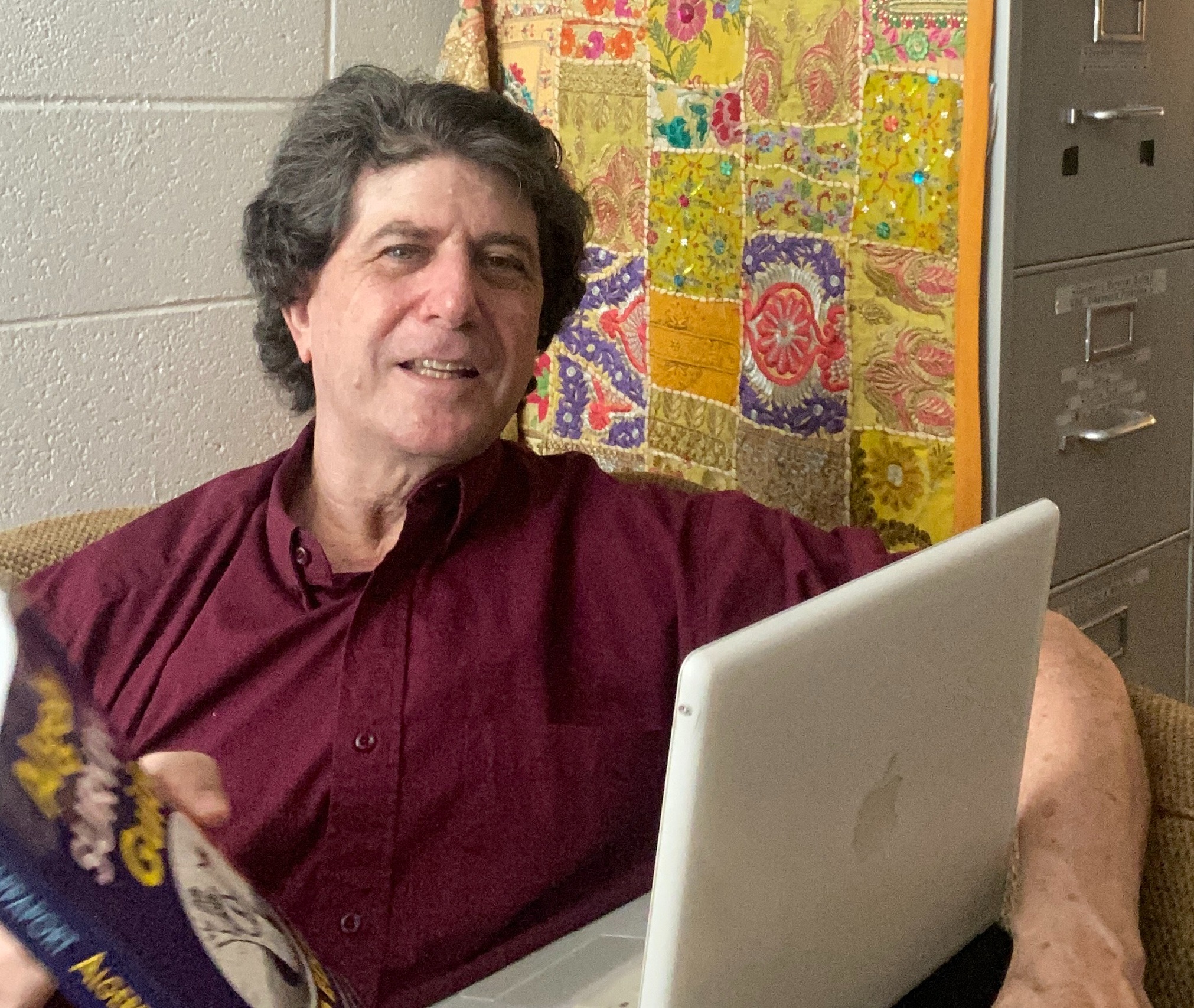
Reporter
Where ideas meet real life
Before teaching and tutoring, I worked as a newspaper reporter in Amarillo, Texas, covering federal and state courts, where the grand ideals of the Bill of Rights were worked out in the world.
Reporting taught me to listen carefully, ask the next question, and explain complicated ideas clearly. Those habits never left me.
The unusual curriculum at St. John’s College had already trained me to linger over deceptively simple questions. During one discussion, our tutor placed two pieces of paper edge to edge and asked: What is a line? Might it be the place where the edge of one piece of paper meets the other? The thought that a line might be a meeting place, rather than a thing, jolted the room into silence and wonder.
Journalism carried that questioning into the world. I found the work fascinating, but over time I wanted more than the role of observer. I wanted to work with people more directly and generatively—to help something positive take shape.
I began teaching Sunday school in Amarillo, partly to discover whether teaching might provide it. I loved it. Not long afterward—while sitting in a McDonald’s, of all places—I decided to leave journalism and become a teacher.
Teacher
Crossing the desk
I moved to Santa Fe, entered a teaching internship, and taught primarily social studies: U.S. History, Civics, Anthropology, and Communication Skills. What I valued most was creating the conditions in which students could discover abilities they had not fully recognized.
One class wrote and produced a play about the abduction and torture of children under South African apartheid; it received an award from Amnesty International. Another transformed the school into a coffeehouse where young writers shared their work with classmates and families.
During my fourth year, a major districtwide restructuring left far less room for that kind of teaching. By then, teaching creative writing had also awakened a deep love of poetry in me. I had the somewhat improbable idea that I could build a tutoring practice, continue working directly with students, and make more room for my own writing.
So I founded Now I Get It! Tutoring—and crossed the desk from teaching a classroom to listening closely to one student at a time.
Author & publisher
A twelve-year laboratory in explanation
Math was almost an afterthought on my first tutoring business card. Yet family after family called for help with Algebra 1. Soon I was eating Algebra, drinking Algebra, sleeping Algebra—and probably dreaming Algebra.
I began creating stories, pictures, and memory devices for my students, putting each idea on a separate index card.
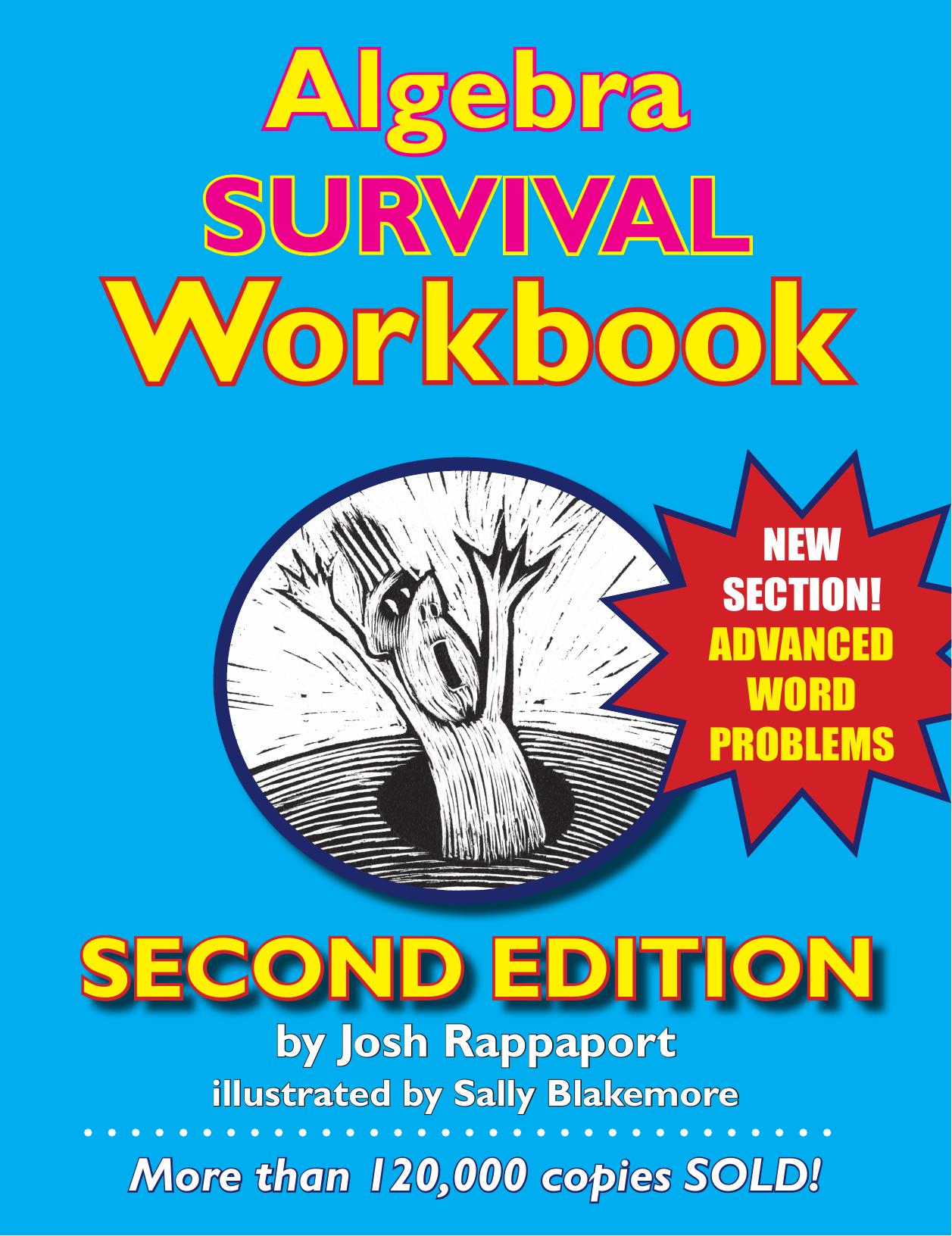
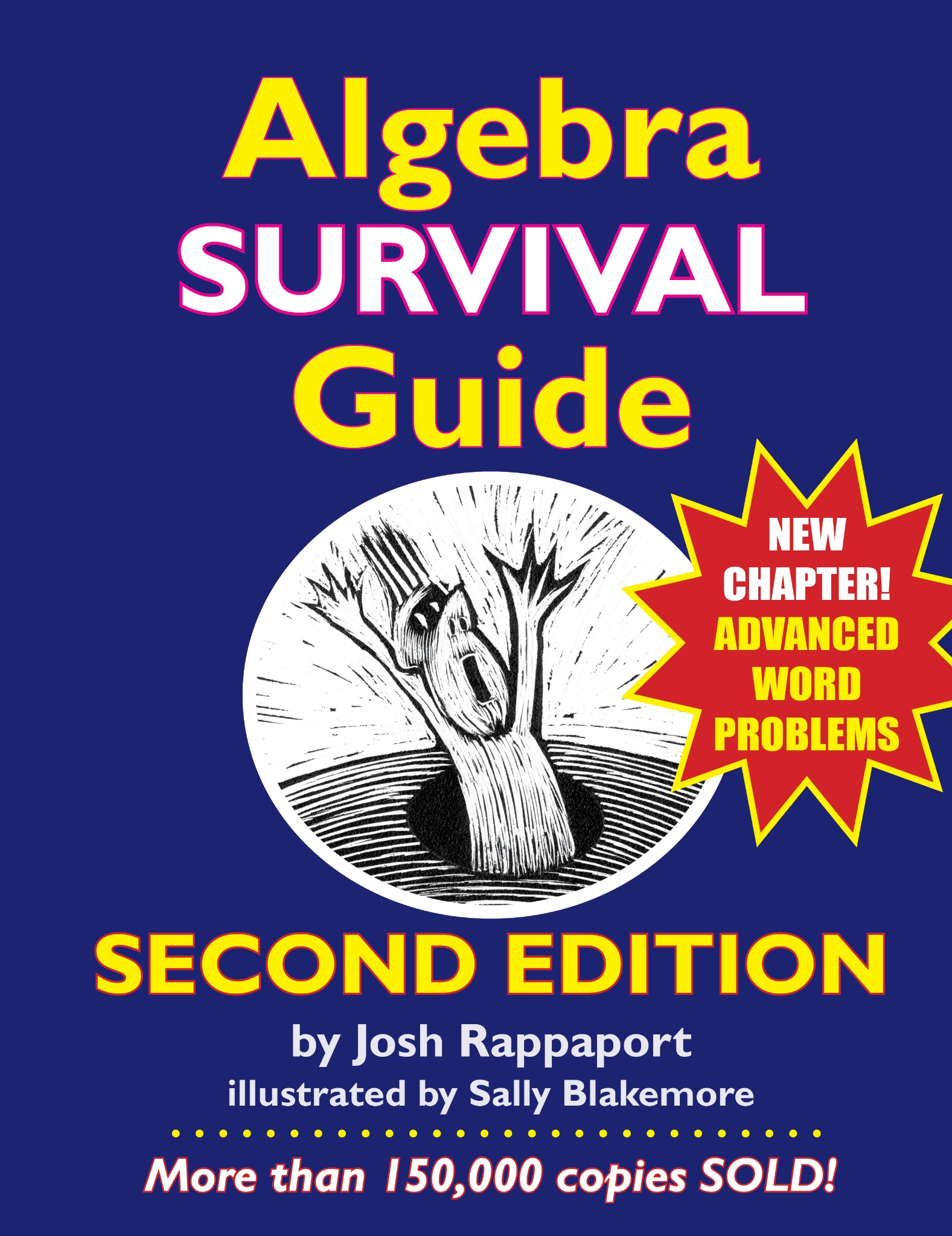
“Josh, I have so many of these cards now,” a student of mine said to me during one session. “Maybe you should write a book with all of these.”
I listened. Two years later, I published the Algebra Survival Guide.
Along with its companion workbook, the book has sold more than a quarter of a million copies. More important for my tutoring, the process taught me to look closely at what makes an explanation accessible, memorable, and exact.
A tug-of-war for integers. Skiing for slope. A jailbreak for radicals. A vending machine for functions. The mathematics stays the same, but the doorway changes with the student.
Symbols should become shorthand for an idea the student already understands—not an incantation to memorize.
Plain-English instructions sit beside the mathematical work so a student can find the precise point where the thread was lost.
A mistake is the end of a thread. Follow it carefully, and it often leads to the deeper misunderstanding underneath.
Experience the difference
The conventional formula is compact—but the friendly version reveals what it means. Once the idea is clear, the symbols can become useful shorthand.
((x₁ + x₂) / 2, (y₁ + y₂) / 2)
Midpoint = (average of the x-coordinates, average of the y-coordinates)
In a geometry session, I might pause and say:
“Isn’t it remarkable that every angle inscribed in a semicircle is a right angle? I wonder why that is…”
Then I may simply leave the question hanging. Not every mathematical idea needs to become a rule or test answer immediately. Sometimes a student needs to experience mathematics as something strange, beautiful, and worth wondering about.
Back where it began
My later tutoring years are less a tidy chapter than a goulash: everything that came before remains in the pot, while each new student adds something. Younger students led me deep into number sense and fractions. Geometry prompted another season of exploration. Test-preparation students led me into Desmos, recurring error patterns, and targeted Teaching Sheets.
My students have not only given me opportunities to teach. They have continually given me new things to learn.
Writing the books taught me how to explain math to an audience.See what students and parents say about Josh’s tutoring
But teaching math to children is a lifelong pursuit since every child is unique.
Considering tutoring?
Tell me a little about your student, the subject, and where things feel stuck, challenging, or stressful. We’ll talk and see whether I may be the guy who can help move things forward.
Get in touch